Flight Tracker
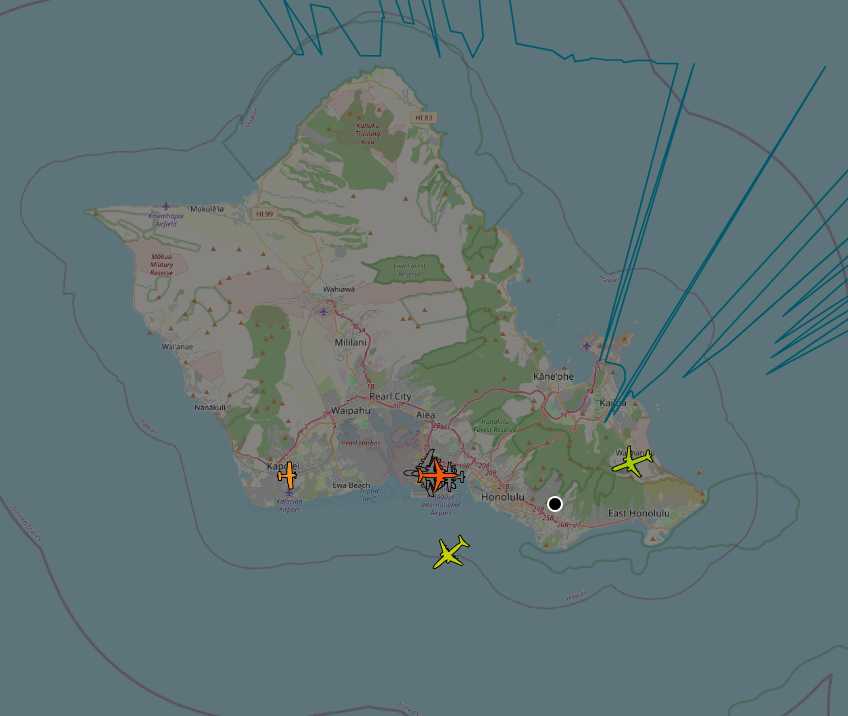
One of my personal projects is adsb.zacklown.com, which is a self hosted ADS-B flight tracking website. ADS-B is a system aircraft use to broadcast their position, altitude, speed, and other flight data. For this project, I set up my own receiver station to collect live aircraft data and display it through a web interface. Instead of using a public tracking service alone, the site is powered by hardware and software running on my own local server. The goal of the project was to learn more about networking, Linux servers, radio communication systems, and self hosted web infrastructure.
A big part of this project was configuring the backend systems needed to receive and process aircraft data in real time. I used an SDR (software defined radio) receiver connected to my server to capture ADS-B signals from nearby aircraft. The data is processed through containerized services running in Docker and then exposed through a web interface using Nginx reverse proxies and HTTPS certificates. I also contribute the aircraft data collected by my receiver to Flightradar24 as a feeder, so the station supports both my own site and a larger public tracking network. I configured the domain, networking, and routing so the site could securely be accessed online from outside my home network. Since the project was self hosted, I had to troubleshoot issues involving containers, hardware connections, SSL certificates, and server networking.
This project taught me a lot about Linux servers, Docker, networking, and SDR technology. Before this, I had never worked much with radio based systems or real time data feeds. I learned how ADS-B works, how aircraft tracking systems operate, and how to host services from a local server instead of depending fully on cloud platforms. I also gained experience debugging live systems where both hardware and software problems could affect the project. Overall, this project helped me better understand real world infrastructure and gave me more experience with full stack deployment and server administration.